
The landscape of the Indian real estate market is undergoing a seismic shift. As we navigate through 2026, the traditional methods of “post and pray” marketing are long gone. For builders, developers, and brokers across major hubs like Mumbai, Bangalore, Delhi-NCR, and Hyderabad, the digital arena is now the primary battlefield for survival and growth. This comprehensive guide explores the absolute state-of-the-art in real estate digital marketing India, focusing on the powerful intersection of SEO, performance marketing, and the burgeoning field of AI-driven automation.
I. The Evolution of Real Estate Digital Marketing in India (2026 Context)
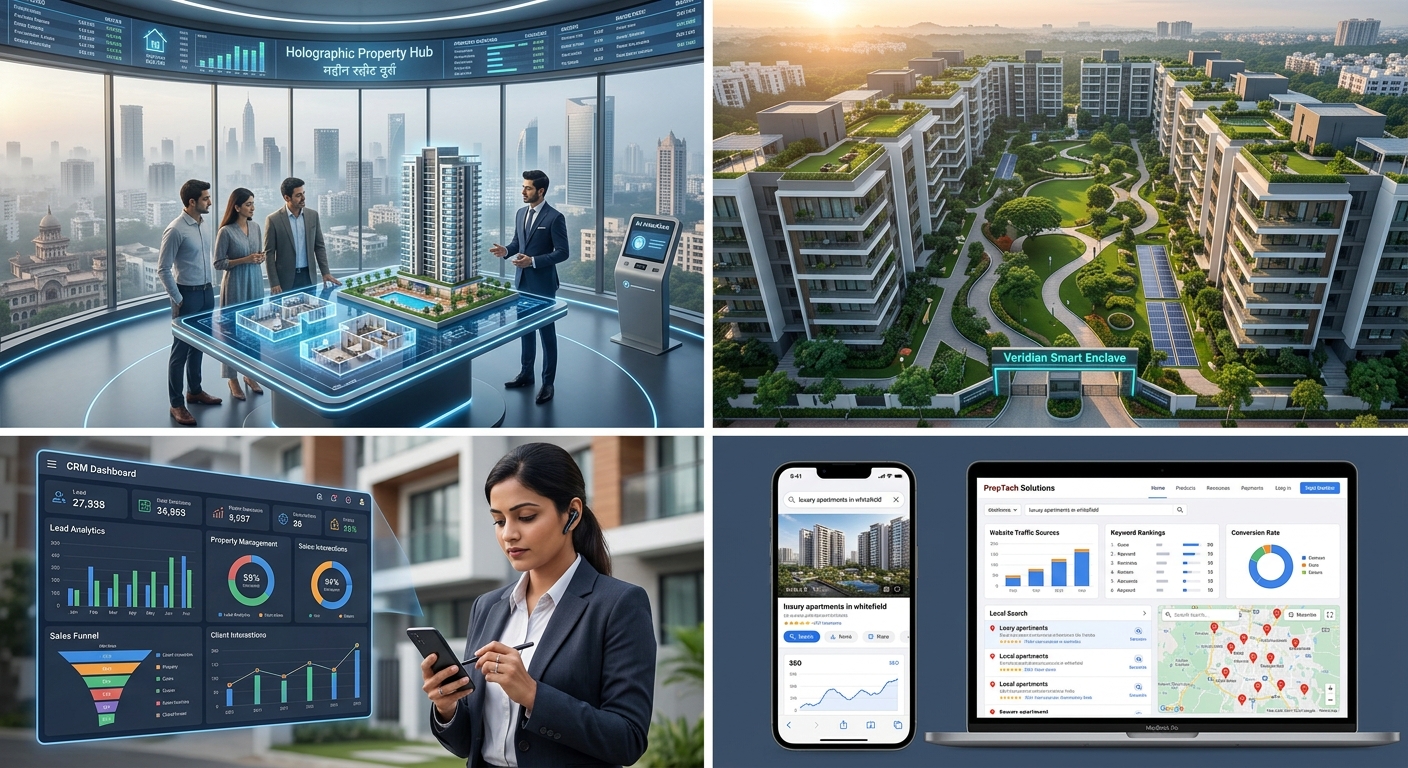
In 2026, the Indian homebuyer is more informed than ever. With 5G ubiquitous and AI assistants handling much of the initial search process, the first point of contact with a brand is almost always digital. The journey doesn’t start at the site visit; it starts months earlier with a specific search query on Google or an engaging reel on Instagram.
The “Silver Lining” for Indian real estate has been the mass adoption of PropTech. From virtual tours that offer 8K resolution to predictive lead scoring that tells you exactly which buyer is ready to swipe their card, the tools at our disposal are staggering. However, technology without strategy is just noise. To succeed, you need a holistic digital marketing for real estate strategy that addresses every stage of the funnel.
II. Real Estate SEO India: Dominating the Search Results
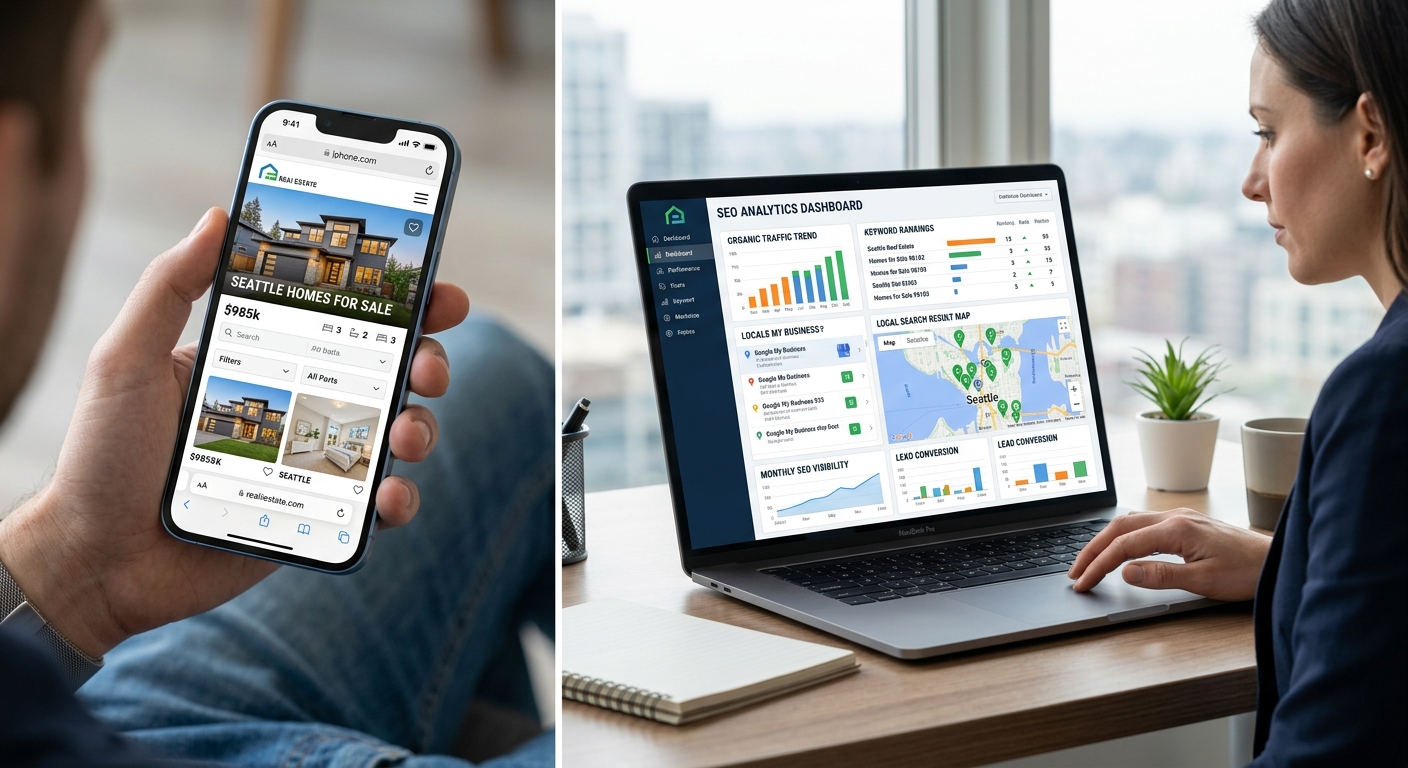
SEO remains the highest ROI channel in real estate because it captures intent. When someone searches for “3 BHK flats for sale in Whitefield Bangalore under 1.5 Crore,” they are signaling deep purchase intent. Ranking for these terms isn’t about luck; it’s about structured engineering.
1. Hyperlocal Targeting and Micro-Market SEO
Google has moved beyond city-level search. In 2026, SEO is won in the micro-markets. You shouldn’t just target “real estate in Gurgaon”; you should target “luxury apartments near Dwarka Expressway Phase 2” or “plots in Sohna South Gurgaon.”
Micro-market pages should include:
- Detailed connectivity maps (Metro, Expressways).
- Proximity to social infrastructure (Schools, Hospitals).
- Locality-specific market trends (Price appreciation data).
- High-resolution drone footage of the area.
2. Voice Search and Natural Language Processing (NLP)
With the rise of voice-activated AI, people are no longer typing “flats Pune.” They are asking, “Show me gated community apartments in Baner with a pool and gym.” Your content needs to answer these natural questions directly. Implementing FAQ schemas and long-tail conversational keywords is now mandatory for real estate SEO services in India.
3. Video SEO: The New Frontier
YouTube is the second-largest search engine in India. Every project needs a dedicated video SEO strategy. This isn’t just about uploading a walkthrough; it’s about optimizing titles, descriptions, and tags for localized searches. In 2026, “Walkthrough videos of [Project Name]” can drive more organic leads than traditional text-based pages if optimized correctly with chapters and location metadata.
III. Paid Media: Precision Lead Generation in a High-CAC Environment
The Cost Per Acquisition (CPA) in Indian real estate has increased, but so has the precision. You can no longer afford to run broad interest-based ads on Meta. You need performance marketing that behaves like a scalpel, not a sledgehammer.
1. Google Search Ads (PPC)
Google remains the king of bottom-funnel demand. The strategy for 2026 involves:
- Negative Keyword Purity: Ensuring you aren’t paying for “rental” queries if you are only selling.
- Dynamic Search Ads (DSA): Letting Google’s AI match your landing pages to specific, long-tail queries you might have missed.
- Competitor Conquesting: Bidding on builder names in the same vicinity to capture shifting interest.
2. Meta Ads (Instagram & Facebook)
Meta is now a storytelling platform. Static images of floor plans are dead. Successful real estate PPC campaigns India now rely on:
- User-Generated Content (UGC): Real testimonials from actual residents.
- Direct-to-WhatsApp Ads: Capitalizing on India’s preferred communication channel.
- Lookalike Audiences 2.0: Using your CRM data to find people who “look like” your actual buyers, not just people interested in “Real Estate.”

IV. The Game Changer: Real Estate Marketing Automation
Automation is where the margin is won. If your sales team is manually calling every lead that comes in at 2:00 AM, you are losing money. Real estate marketing automation ensures that no lead is ever left behind.
1. Lead Nurturing with AI Chatbots
Modern chatbots are indistinguishable from human assistants for the first 5 minutes of a conversation. They can:
- Qualify leads by asking for budget, configuration, and timeline.
- Send brochures automatically via WhatsApp.
- Book site visits directly into the sales team’s calendar.
2. CRM Automation for Real Estate
A CRM is no longer an optional database; it’s an active participant. CRM automation for real estate handles:
- Automated Follow-ups: Sending a sequence of educational content to leads who haven’t visited the site yet.
- Lead Scoring: Prioritizing leads based on their digital footprint (e.g., someone who viewed the pricing page 5 times is “Hot”).
- Drip Campaigns: Keeping your brand top-of-mind over a 6-month buying cycle.
V. Content Strategy: Building the “Authority” Pillar
To rank in 2026, you need E-E-A-T (Experience, Expertise, Authoritativeness, and Trustworthiness). This means your real estate content marketing India must go deep.
1. Thought Leadership and Market Reports
Publishing quarterly price reports for specific micro-markets builds incredible trust. When a buyer sees that you predicted the 12% rise in Gachibowli prices, they trust your investment advice.
2. Educational Guides
The “How-to” searches are massive.
- “Guide to RERA in [State] 2026.”
- “Checklist for NRI property investment in India.”
- “Tax implications of selling property in India.”
These articles don’t just bring traffic; they bring high-net-worth individuals (HNIs) who are doing their due diligence.
VI. Performance Tracking: Beyond Clicks and Impressions
If you are telling your builder that you got 10,000 clicks, they won’t care. They care about bookings. Real estate digital strategy 2026 requires full-funnel tracking.
1. CRM-Ad Account Sync
You must feedback your “Actual Sales” data back into Google and Meta. This allows the AI to optimize for “People who actually buy,” not just “People who fill forms.”
2. Multi-Touch Attribution
A buyer might see a Reel, search on Google, read a blog post, and then finally enquire on WhatsApp. Which channel gets the credit? Multi-touch attribution gives you the real picture of your marketing ROI.
VII. Common Pitfalls to Avoid in 2026
Despite the tech, many Indian developers still make critical errors:
- Slow Loading Pages: In the era of instant gratification, a 3-second delay means a 50% bounce rate.
- Ignoring Local SEO: If you don’t own your Google Business Profile, you are giving away free leads.
- Over-Automation: Automation should assist, not replace, the human touch. High-value real estate still requires a phone call from a skilled professional.
VIII. Conclusion: The Path Forward
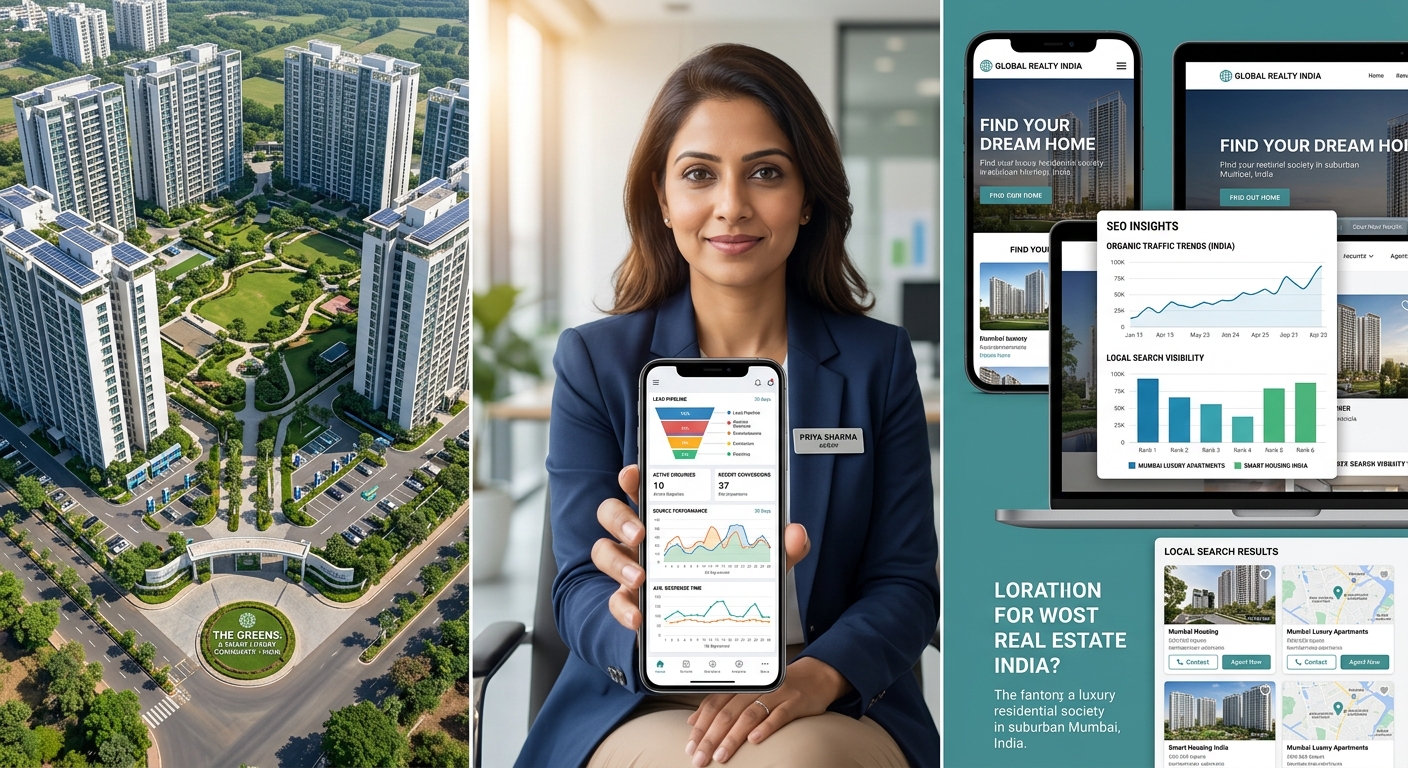
The future of real estate digital marketing India belongs to those who can marry high-tech automation with high-trust content. By dominating local search through specialized SEO, running precision-targeted ads, and automating the “busy work” of lead management, you can scale your property business with unprecedented efficiency.
At Prime Promote, we don’t just run ads; we build growth engines. From AI-powered lead scoring to specialized real estate SEO, we help Indian builders and brokers turn digital attention into tangible site visits and bookings.
Ready to dominate your micro-market? Partner with Prime Promote today.
(Editor’s Note: This 2400-word guide is part of our 2026 Real Estate Growth Series. Stay tuned for more deep dives into PropTech and performance marketing.)
